
There’s a quieter version of Britain waiting just beyond the motorway – one of village greens, dry-stone walls, and mornings that don’t need a schedule. If you’re craving a break that feels genuinely restorative rather than rushed, slow travel through the British countryside might be exactly what you need. This guide pulls together the most charming village settings, the kinds of rural retreats that suit an unhurried pace, and practical advice for planning a stay where the whole point is simply to breathe.
What Makes a British Village Ideal for Slow Travel
Not every pretty village earns the slow travel label. The ones that do tend to share a quiet but unmistakable quality: they make you forget what day it is, in the best possible way.
The right mix of footpaths, independent shops, and unhurried locals creates something you can’t manufacture. These places invite you to arrive without a schedule.
Atmosphere and Sense of Place
There’s no denying that character matters. A village with a medieval church, a tucked-away tearoom, and a pub that’s been there since the 1700s offers something genuinely restorative. You feel held by history rather than overwhelmed by it.
Pace and Permission to Rest
Slow travel works when a place actively discourages rushing. Narrow lanes, no through-traffic, and a weekly farmers’ market rather than a supermarket all quietly signal: there’s no hurry here.
Practical Appeal
Walkability is everything. A village where you can reach a scenic footpath, a decent lunch, and your accommodation entirely on foot removes the logistical friction that keeps ordinary trips feeling like work.
Charming Villages to Base Yourself In
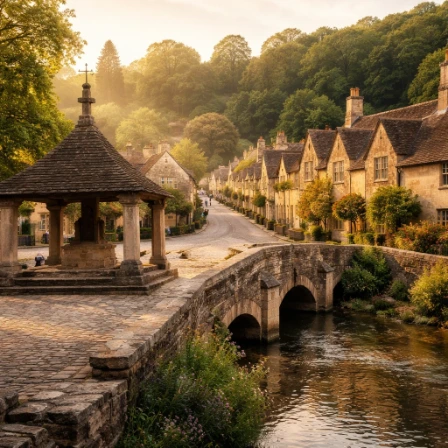
Some of Britain’s most restorative places aren’t cities or resorts – they’re small villages where the pace drops the moment you arrive. These four spots each offer something quietly distinct.
Castle Combe, Wiltshire
Frequently called England’s prettiest village, Castle Combe earns the title. Honey-coloured Cotswold stone, a medieval market cross, and a clear chalk stream running beneath an old bridge – it’s genuinely picturesque. Ideal for couples wanting a slow weekend with good food and gentle valley walks.
Bibury, Gloucestershire
Arlington Row, a terrace of 17th-century weavers’ cottages, is the image most people associate with the Cotswolds. Bibury suits anyone happy to wander beside the River Coln and spend an afternoon at the local trout farm.
Clovelly, Devon
Cars can’t reach this cobbled fishing village – donkeys and sledges still carry supplies down its steep main street. Clovelly suits adventurous travellers who enjoy dramatic coastal scenery alongside proper cream teas.
Hawkshead, Cumbria
Tucked into the southern Lake District, Hawkshead has whitewashed buildings, car-free lanes, and a strong connection to Beatrix Potter. Walkers and families find it a perfect base for gentle lakeside routes.
Peaceful Countryside Retreats and How to Choose Yours
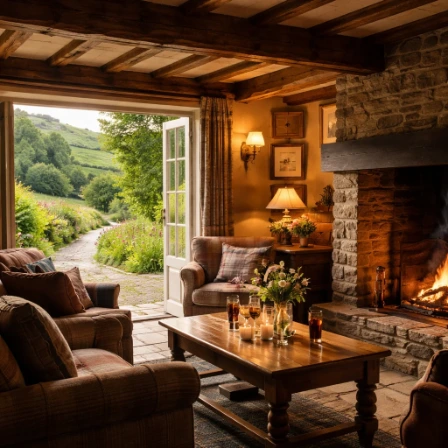
Finding the right base shapes the entire trip. The style of accommodation you choose determines your pace, your privacy, and honestly how well you actually switch off.
Cosy Pub Rooms
Perfect for solo travellers or couples who want community without effort. A good village pub room puts you steps from a real fire, local ale, and conversation. Look for ones with walking routes from the door – the Cotswolds and Peak District have plenty.
Boutique Rural Hotels
These suit anyone craving comfort alongside quiet. Small country-house hotels near national parks like Dartmoor or the Yorkshire Dales offer spa facilities without the resort crowds. Book well ahead for autumn weekends.
Farm Stays and Shepherd’s Huts
There’s no denying the appeal of waking to actual farmland. Shepherd’s huts suit couples seeking total seclusion – no shared walls, often no Wi-Fi. Check whether the farm is car-free accessible before booking.
Self-Catering Cottages
Families and groups tend to gravitate here. A stone cottage in Northumberland or coastal Cornwall gives you your own rhythm entirely. Prioritise properties within walking distance of a village shop so you’re not driving daily.
The Best British Breaks Are the Slowest Ones
There’s a quiet kind of pleasure in choosing one place and staying long enough to know it properly – the baker who opens at seven, the footpath behind the church that nobody else seems to use, the pub that fills up just before dusk. Slow travel in Britain isn’t about covering ground. It’s about mornings with no particular plan, long lunches that stretch into the afternoon, and walks taken purely for the sake of them. Pick a village, a valley, or a stretch of coast, and let it set the pace. You don’t need a packed itinerary to feel like you’ve had a real trip. Sometimes the most restorative thing you can do is simply arrive somewhere beautiful and stay a little longer than feels strictly necessary.